
By Jonas Bengtsson
This space does not lack technical explainers. I've written some of them. This time I'm trying something different: plain English, three acronyms (PCF, EPD and RPV, which earned their place), and the rest of the alphabet soup and standard references left at the door.
After 20 years of working in this area, I still don't have a one-size answer for concrete. The measurement system was never designed for the way concrete actually gets made, and the procurement signals coming from your buyers are pulling in different directions. The market isn't waiting for the methodology debate to resolve, and your competitors aren't either.
This piece is about how to make the right choice for your business: what's a no-regrets first step, what's a must-have for the markets you sell into, and what's a nice-to-have that can wait.
Why concrete is hard
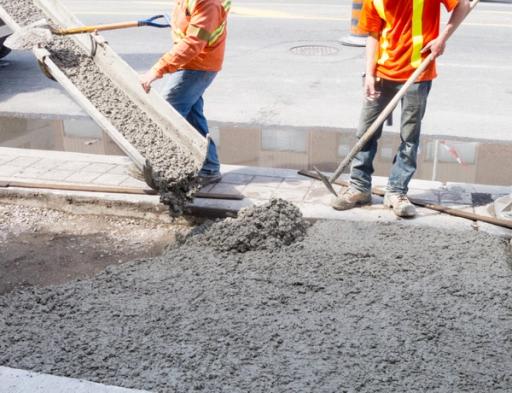
Concrete looks like a manufactured product on paper. In practice it behaves more like an on-demand service. A single batching plant might supply 20, 50, sometimes 100 different mixes in a given week, each tailored to a project's needs. The mix you supplied to a high-rise this morning is technically a different product to the mix you'll supply to a footpath this afternoon, and a different product again to the same high-rise mix produced six months ago after your slag supplier changed.
Add the procurement layer and Green Star asks for one thing, the Infrastructure Sustainability Council asks for something adjacent but different, the NSW Low Carbon Concrete Specification has its own rules, and commercial clients with their own carbon targets want their own format. Each is reasonable in isolation, but stacked together, they're a measurement load the production system was never built to carry.
Four mix designs
There are roughly four routes to credible numbers, each with manufacturers who have made it work.
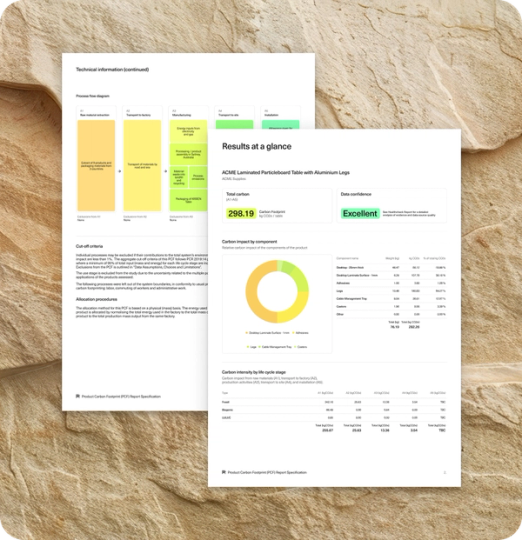
- A digital platform producing a PCF. Same core carbon question and calculation method as an EPD, no breadth across environmental results. Valid for five years. Rebuilt is the most visible Australian example. Useful for getting credible and verified carbon numbers fast, particularly if you're not ready for EPD investment, or don't need a broader environmental impact analysis. Recognition is now widespread across major frameworks and ratings, with more recognition pathways still emerging.
- A traditional EPD. A consultant generated, third-party verified document, registered with EPD Australasia, recognised by every major procurement framework, valid for five years, with higher setup cost and higher marginal cost per declaration. Most of the market started here.
- An EPD process you run in-house. Same recognition as a traditional EPD, but set up as a license to print EPDs on demand. Your internal system is verified annually, so you can issue project-specific EPDs without going through full external verification each time. Holcim built the first in-house EPD process for concrete in Australia, and Allied Concrete followed in New Zealand. Both started as pioneers with traditional EPDs, then graduated to in-house process systems they run for any mix, project and region. Powerful at scale, but expensive to set up, exposed when the rules change, ongoing maintenance and verification.
- An industry tool. The global cement and concrete industry has built its own EPD tool designed for this sector. Heidelberg Materials Australia (formally Hanson) uses this approach, publishing project-specific EPDs one at a time for major infrastructure tenders (Bunbury Outer Ring Road, M4-M5 Link Tunnel, Rozelle Interchange). Cement Australia uses it for its low-carbon cement ingredients. They sit one step upstream as a cement supplier, not a concrete producer, with a simple pitch to downstream producers: drop it in to get your embodied carbon number accurate.
Sitting alongside any of these are “best-practice” certifications and labels (Climate Active, GreenTag, GECA, Declare, Cradle to Cradle, and others) that translate the underlying data into a procurement signal. None of these replace an EPD or PCF, they add to them.
“Customers want the latest data available for all of their raw materials, and we needed a method of carbon reporting that is not time or cost-prohibitive, and that customers and consultants can actually use directly in their own tools and mixes.” Martin Lynch, Product Development Manager, Cement Australia
Same evidence following the same standards, four different paths. The right path depends on scale, on customer mix, and on where you sit in the value chain.
How to cement your credentials
Green Star projects score concrete products through what's called a Responsible Product Value, or RPV. In summary:
- For a Green Star structural credit, half the structure by cost needs to score 10 RPV or above for credit achievement.
- For exceptional performance, that lifts to 80% of the structure at 10 RPV, or 10% at 15 RPV.
Here's how the common combinations stack up for concrete:
- PCF or a product-specific EPD alone: currently 2 and 7 RPV respectively. Below the 10-RPV threshold for credit achievement.
- Good Environmental Choice Australia certification for concrete: 16 RPV. Currently clears the 15 RPV Best Practice threshold on its own.
- Good Environmental Choice Australia combined with a verified PCF: 18 RPV (the PCF adds two points), capped at the 15 RPV Best Practice threshold for credit purposes.
- Good Environmental Choice Australia combined with an EPD: also clears Best Practice and appears as a recognised combination in GBCA's framework documentation.
There's no bonus for going beyond the threshold: a 22 RPV is treated the same as 15. The question isn't how high you can go. It's the most cost-effective combination that hits what your buyers actually need.
One change under consultation by the GBCA is worth watching: RPV may be capped at 8 unless the product has verified carbon proof (a PCF or an EPD) underneath it. If that rule lands, a strong ecolabel on its own would no longer clear the credit threshold. Carbon measurement becomes the gate to RPV recognition, not just one input into it. This shifts the practical answer for any manufacturer leaning on certification without an underlying PCF or EPD.
Even at current rules, the carbon data underneath isn't decorative. State infrastructure procurement, major commercial buyers with carbon and science-based targets, and the Infrastructure Sustainability Council all want to see the actual measurement, not just the recognition that follows it. Green Star recognition is one procurement signal among several. The right combination depends on which signals your buyers are sending.
This is why many concrete suppliers run the approach they do: verified carbon transparency paired with ecolabel certification and an optional carbon neutrality overlay, deliberately mapped to Green Star credit thresholds.
It isn't badge-collecting. It's the maths working backwards from the credit thresholds their customers are targeting.
Foundation, structure, finish
After a lot of attempts to find one right answer, I'd reduce the decision to three layers.
- No regrets as the foundation. Things every concrete manufacturer should do regardless. Understand the carbon profile of your cement supplier and your major secondary ingredients. Pick a measurement method, even if it isn't perfect, and start producing numbers. Waiting for the perfect framework is being absent from the conversation while competitors win the tenders.
- Must-haves are the structure, and they depend on the markets you sell into. PCF or EPD are now base currencies. Selling into Green Star projects? A PCF or EPD alone falls below credit achievement, so you'll need at least one additional recognised initiative paired with it, or a strong ecolabel like Good Environmental Choice Australia or GreenTag that can reach Best Practice on its own.
- Nice-to-haves are the finish, and the line between must-have and nice-to-have shifts with your buyer mix. Carbon offsets are useful in some markets, contested in others. Declare or health-related declarations add credibility in some environments and duplicate paperwork in others, and don't add much value to concrete products. The trick is to recognise which is which for your customer base, and not to confuse layered certifications with deeper decarbonisation. A stack of certifications on a high-carbon mix is paperwork. A measured, transparent low-carbon mix is progress.
Where to break ground
The choice isn't between right and wrong. It's between matching what your buyers will reward over the next three to five years, and building a measurement approach that flexes as the procurement signals harden.
Three questions to leave with. Where are your three biggest buyers heading on embodied carbon? What's the format they will accept twelve months from now? Does your current measurement match?
If you'd like the full alphabet soup served and explained, with every acronym, every framework, and every trade-off discussed, give me a call or let's grab a coffee. The piece above is the map. For most, it's in the conversation that we figure out which path is yours.
Discover more

HOT TAKES: What precast concrete makers need to know about concrete innovation
Insights
Cement Australia: Verified Carbon Data Drives Decarbonisation
Case Study

Win more Commonwealth work with verified carbon and recycled content
Insights
EPD or PCF? How to keep building product-specific data working hard in a capital-constrained economy
Insights
Rebuilt Compliance Statement
Resources
Corporates won’t hit their carbon targets without fixing this data problem
Insights