A Product Carbon Footprint (PCF) is a life cycle assessment that provides a detailed analysis of a product’s impact on greenhouse gas creation across its lifecycle.
Product Carbon Footprints cover the same lifecycle stages as they would in other LCA analyses. For most product manufacturers this is the product stage A1-A3 or cradle to gate. Rebuilt reports also offer an option for customers to add A4-A5 should a Cradle to Practical Completion or Upfront Carbon analysis be required.
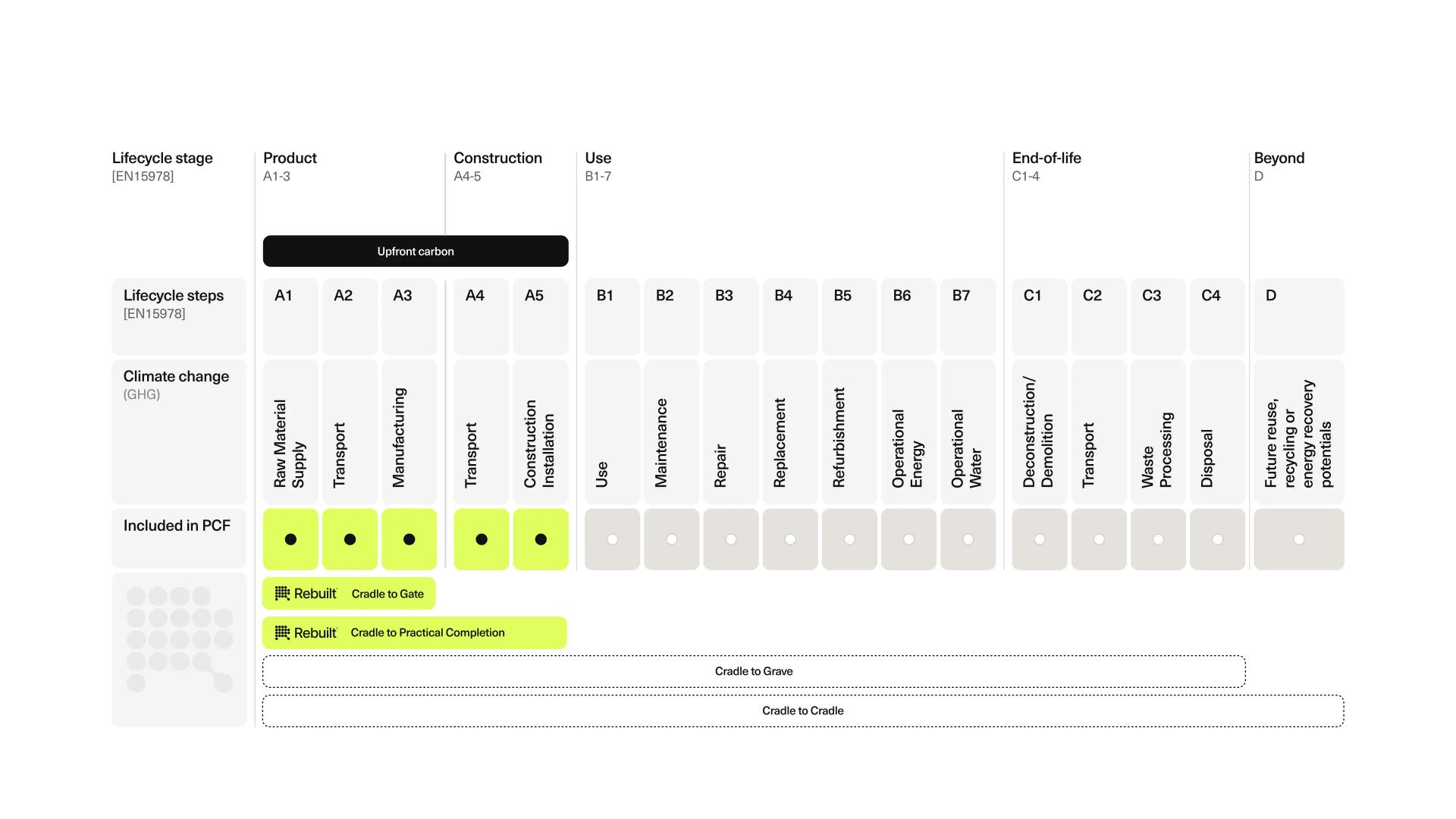
PCFs are used globally
This globally recognised methodology is widely used by companies, governments, and standards agencies to assess and compare the embodied carbon emissions in goods and services - the things that we buy and the services we use.
Product carbon footprints are becoming increasingly important in demonstrating compliance with corporate and regulatory sustainability reporting requirements in a credible and consistent way.
Product carbon footprints are acceptable under multiple international legislation frameworks and aligned to LCA frameworks.
In Australia, independently verified PCFs are acceptable under NABERS Embodied Carbon rules, and under Climate Active product certifications and can contribute to reporting requirements under Planning regulations.
With the introduction of climate disclosure legislation under the Corporations Act in 2025, many corporations are now expecting their supply chain to provide them with PCFs on an annual basis to support their mandatory climate disclosure reporting requirements.
When to choose a PCF over other environmental impact reports
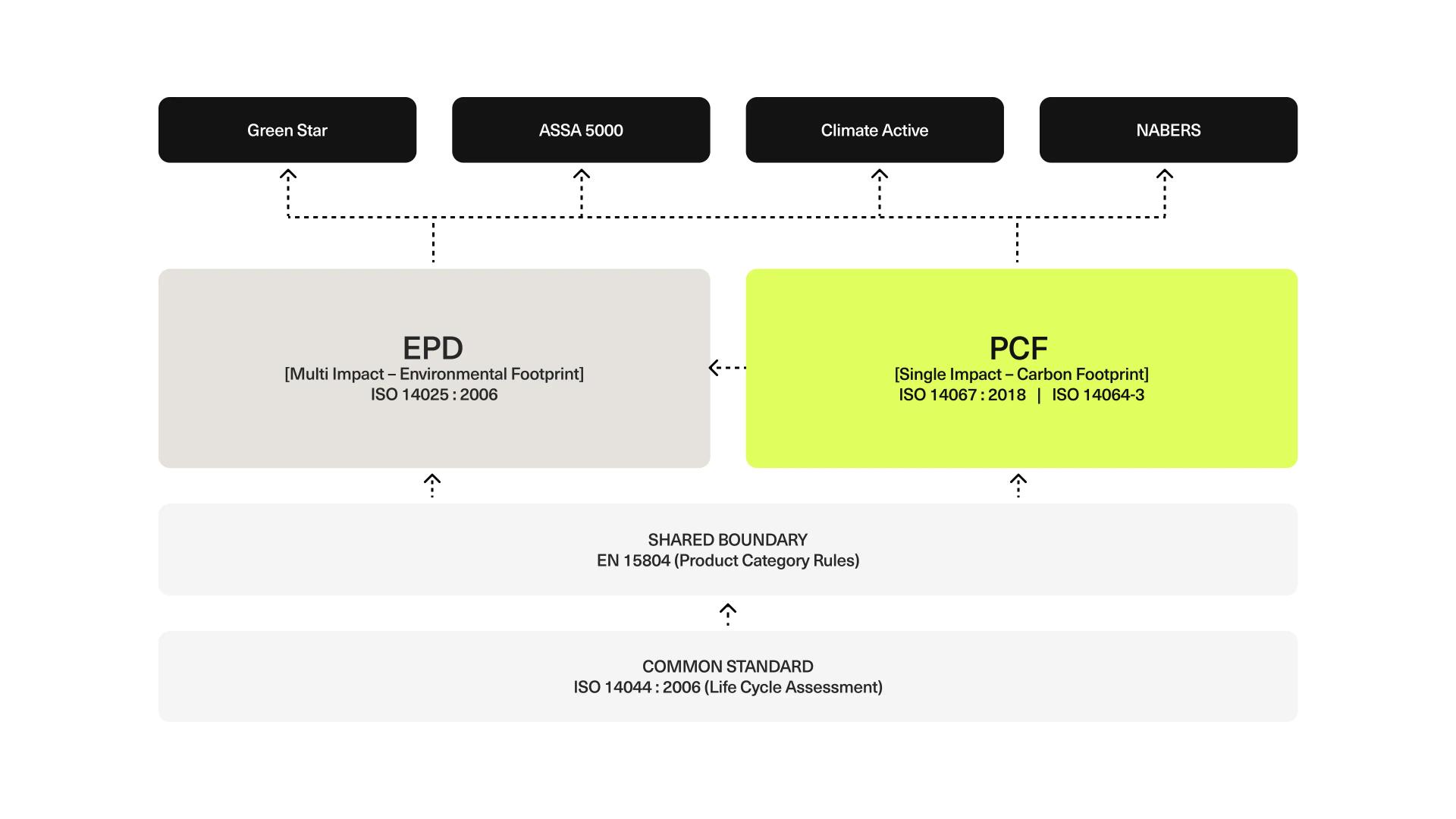
Because a PCF only measures the single criteria of carbon, rather than the multiple environmental impacts of a full LCA or EPD, it can act as a lower cost entry point to a full LCA or EPD. A PCF meets compliance obligations whilst allowing for upgrade to a multi-criteria impact analysis if later required.
How Rebuilt independently verifies PCF results
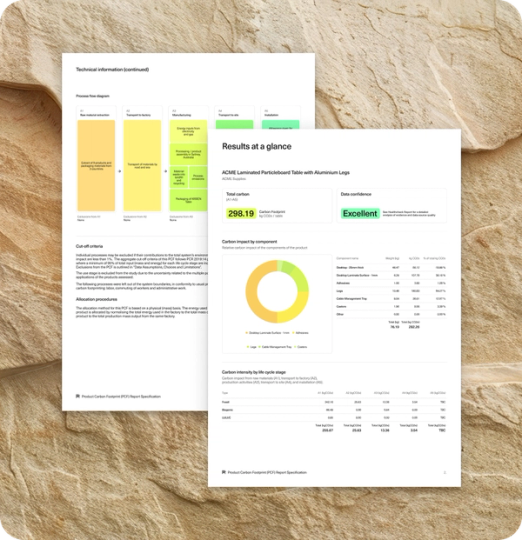
The Rebuilt platforms allows our customers to develop and iterate your own PCF analyses, using plain English prompts and data look-ups. Once you are happy that your claim is as complete and accurate as possible, you submit your declaration to Rebuilt for expert review and verification of claim.
Whilst verification is not essential under ISO 14067, it is essential if you wish to use your PCF results to make public claims. That's why our Rebuilt LCA experts verify all of our customers’ submitted product carbon footprint assessments using ISO 14064-3 and apply the principles and governance as set out under ISO 14025, ISO 14065 and ISO 14071 to ensure expert and independent review prior to verifying your results to a limited assurance level.
The standards that govern the creation and verification of PCFs
A product carbon footprint calculation is defined under ISO14067 and is aligned to international standards, including the Greenhouse Gas Protocol and other widely used Lifecycle Carbon Inventory (LCI) calculation methodologies (ISO 14040, ISO 14044 and the ISO14060 series).
Rebuilt product carbon footprint ratings use the building and construction product category rules (PCR) as set out under EN15804 to further help ensure that results are comparable.
Why is that significant? This alignment of methodologies ensures accuracy and consistency in carbon assessments and enables them to be exchanged between different parts of a company’s supply chain.
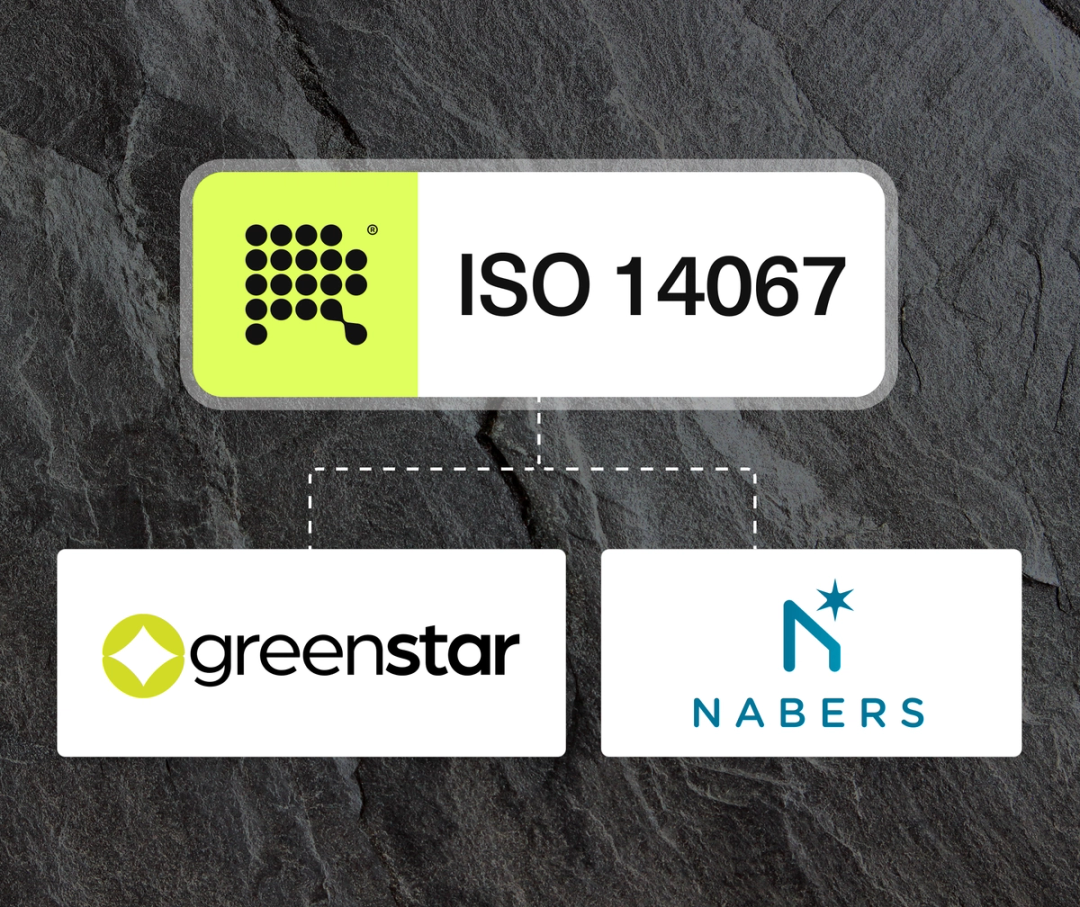
Once verified, your ISO 14067 PCF reports are acceptable under NABERS and Green Star responsible products
Discover more
Corporates won’t hit their carbon targets without fixing this data problem
Insights

Recycled, recyclable, or just wishful thinking?
Insights

From product carbon to product innovation, what Rebuilt’s work with furniture manufacturers is showing
Insights

EPD or PCF? How to keep building product-specific data working hard in a capital-constrained economy
Insights

Product Carbon Footprint Labels: Quantifying the Value of Circular Materials in Reshaping Construction
Insights

Make carbon a feature, not a footnote: Turn every chair, workstation, and panel into verified data
Insights