By Esther Bailey
We are thrilled to have recently collaborated to complete a world-leading study for the prefab sector. An independent verification of a completed MOOV Modular dwelling found:
- 20% recycled-content by weight of dwelling
- 382.3 kgCO₂e/m² upfront embodied carbon footprint of (A1–A3)
- 86% of suppliers named government procurement requirements as the strongest driver for increasing recycled-content uptake.
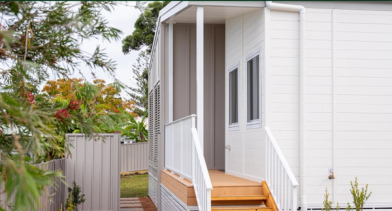
Recycled content is one of the easiest claims to make in a tender and one of the hardest to prove. A supplier says a product is "30% recycled." Is that per unit, or is it an average across an entire manufacturing site for the year? Is there a chain-of-custody record behind it, or is it a number pulled from a marketing sheet? Most procurement teams have no reliable way to tell the difference, which means most recycled-content targets end up built on claims rather than evidence.
Homes NSW set out to close that gap. Working with Good Environmental Choice Australia (GECA), and Rebuilt, the department commissioned an independent verification of a completed modular dwelling delivered by MOOV Modular under the Modern Methods of Construction Program. The brief was simple to state and hard to deliver: turn recycled-content and carbon claims into procurement-ready evidence.
Rebuilt is proud to have partnered with GECA, Homes NSW and MOOV Modular on this world-leading work.
It's the kind of project our platform exists for: taking carbon and material data that usually sits buried in supplier PDFs and site-wide averages, and turning it into a baseline a government buyer can actually stand behind.
Why claims alone don't hold up for government procurement
For decades, "recycled content" has been treated as a box to tick in a design brief rather than a figure to substantiate. Suppliers are increasingly willing to report a number. Far fewer can back it with production records, chain-of-custody documentation, or independent verification. GECA's assessment mapped more than 20 material categories across the dwelling's supply chain and found exactly this pattern: reporting maturity varies enormously between materials and manufacturers, even within the same building.
That variance matters because a government department can't set a credible target, let alone track progress against it, using numbers it can't verify.
The project, in numbers
The study assessed a single-storey, steel-framed volumetric home: 77 m² total area, roughly 58 m² of internal floor space plus an external porch, and around 14 tonnes of confirmed material mass captured in the bill of quantities. GECA reviewed more than 100 sources of Australian and international literature, standards, policy and case studies before testing what could actually be verified inside MOOV's real supply chain.
Six material streams were assessed in detail for recycled content and benchmarked against global best practice:
- Structural steel. 24% recycled content as reported, 17% once recalculated to an ISO 14021-aligned method. Conventional blast-furnace steel typically sits at 20–30% recycled content, while electric arc furnace production can reach 60–90%. The bigger finding isn't the percentage so much as the production route: shifting to EAF steel does more for both recycled content and carbon than pushing harder within the conventional process ever could.
- Aluminium. 0% recycled content currently reported, against a near-term opportunity of 20–30% and global best practice as high as 75%. This is the single largest gap the study found, flagged as very high priority.
- Plasterboard. 4–7% reported, against a global best-practice range of 20–30%. Also very high priority, with the opportunity concentrated in recovered gypsum and clearer disclosure of what's actually in the liner versus the core.
- Engineered wood. Around 40% reported, against 70–90% achievable internationally. High priority, with room to grow through recycled fibre content in flooring and joinery.
- Insulation. 82% reported, already close to the 85–90% global benchmark. Low priority for further gains. The task here is holding the line and tightening up the evidence behind it.
- Composite decking. 85% reported, against a 95–99% ceiling. Also low priority, with a recommendation to favour independently verified products above 90% as they become available.
The pattern across all six is the same: recycled content and carbon reduction don't move together in a straight line. Aluminium and plasterboard have the furthest to travel on recycled content, but structural steel has more influence over the carbon number simply because of how much of the dwelling's material mass it accounts for.
What actually moves suppliers
Post-COVID leasing patterns have materially shortened. The average Australian GECA's supplier engagement produced one of the clearest signals in the whole study: 86% of suppliers surveyed pointed to government procurement requirements and customer demand as the strongest driver for increasing recycled content. Not sustainability messaging. Not industry guides. Procurement requirements, backed by evidence.
That finding lines up with what we've seen across Rebuilt's own work with manufacturers. Carbon and material disclosure rarely shift on their own. They shift when a buyer with real volume starts asking for the evidence consistently, and rewards the suppliers who can produce it.
From baseline to procurement action
The study's recommendations aren't built around a single blanket target. Instead they set out a staged approach: different ceilings for different materials, evidence requirements built into tenders from the outset, and a "confidence" score tracked alongside the recycled-content percentage itself, so Homes NSW can tell a verified product-specific figure apart from a site-wide average. Government buying power, focused on a small number of high-volume strategic suppliers, is identified as the fastest way to move the market.
Circularity, in other words, isn't being treated as a design-brief aspiration here. It's a procurement lever with a measurable baseline attached to it.
Full background analysis
The numbers above are the headline of a much deeper piece of work. GECA's full report runs to more than 160 pages and covers the entire study: a literature review of over 100 sources spanning ten international jurisdictions, including the UK, Sweden, Germany, Singapore, Japan and China; a full supply chain and material hotspot mapping of the MOOV dwelling; the verification methodology used to test each recycled-content claim against AS/NZS ISO 14021; the benchmark-setting process behind every material target; the embodied carbon modelling Rebuilt carried out under baseline and uplift scenarios; and sixteen detailed recommendations spanning circular design, procurement, verification and policy. If you want to see how the 20.1% baseline was actually built, material by material and supplier by supplier, this is where that evidence lives.
The short version
If you just want the results, the headline baseline, the six material benchmarks, and what Homes NSW is doing with them next, GECA's case study summary covers it in a few pages.
Sources:
This project reflects a partnership between Rebuilt, GECA, Homes NSW and MOOV Modular. Rebuilt provided the embodied carbon analysis underpinning the study's baseline and scenario modelling.
Discover more
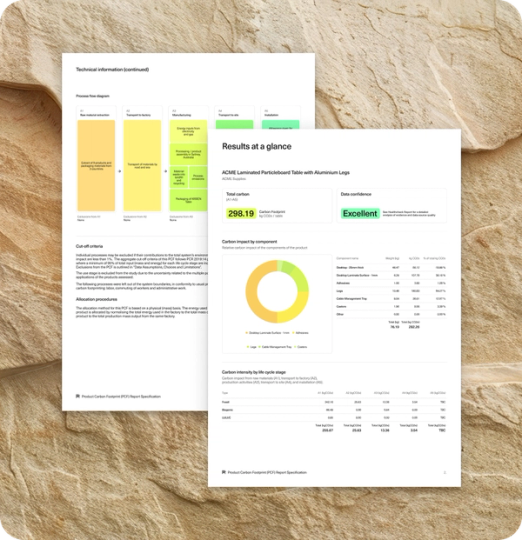
Corporates won’t hit their carbon targets without fixing this data problem
Insights

Recycled, recyclable, or just wishful thinking?
Insights
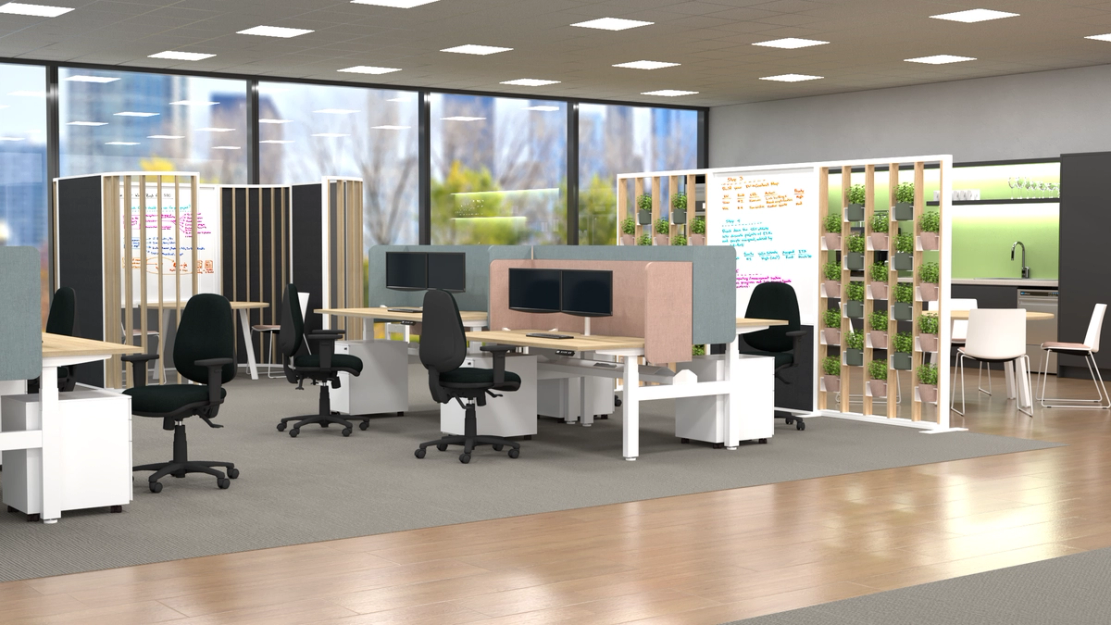
From product carbon to product innovation, what Rebuilt’s work with furniture manufacturers is showing
Insights
EPD or PCF? How to keep building product-specific data working hard in a capital-constrained economy
Insights
Product Carbon Footprint Labels: Quantifying the Value of Circular Materials in Reshaping Construction
Insights

Make carbon a feature, not a footnote: Turn every chair, workstation, and panel into verified data
Insights